

『In Line Compressed Air Flow Meter: Tracking Factory Utility Consumption Rates for Carbon Footprint Audits』Related information(v cone flow meter|rotary gas meter|gallon meter|gear meter|metal tube rotameter|glass tube rotameter|nutating disk meter|transit time ultrasonic flow meter|wedge flow meter|pd meters|hydraulic flow meter|ultrasonic water flow meter|water flow meter|air flow meter|magnetic water flow meter|oxygen flow meter|gas flow meter|argon flow meter|air velocity meter|gasoline flow meter|fuel flow meter|ultrasonic water meter|digital water meter|nitrogen flow meter|solid flow meter|Oxygen tank flow meter|digital water flow meter|diesel fuel flow meter|steam flow meter|02 flow meter|compressed air flow meter|oil flow meter|liquid flow meter)
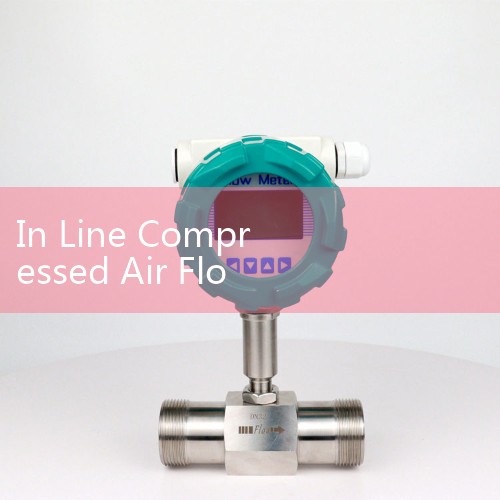
In Line Compressed Air Flow Meter: Tracking Factory Utility Consumption Rates for Carbon Footprint Audits
Quick Answer: An in line compressed air flow meter measures real consumption inside a pipe and sends data to a PLC, energy monitor, or audit log. The meter tracks factory utility consumption rates for specific lines and machines. Carbon footprint audits get actual compressed air usage instead of run hour estimates.
Compressed air is one of the most expensive utilities in a plant. A 75 kW air compressor can use more than 600,000 kWh per year. In many factories, 20 to 30 percent of compressed air is lost through leaks, drains, and open blow-offs. Because the air system is shared, managers often do not know which production line uses the most air.
Why Compressed Air Flow Data Matters for Carbon Audits
Carbon footprint audits cover electricity, fuel, steam, water, and compressed air. Compressed air is indirect emissions from electricity. If air flow is not measured, the audit uses compressor rated power and operating hours. That approach hides leakage and production changes.
An in line compressed air flow meter removes that guesswork. It records Nm3/h or kg/h and totalized flow per shift, day, or month. A plant can compare actual Nm3 to compressor kWh. The result is a specific power number in kWh per Nm3. A common figure is 0.11 to 0.15 kWh per Nm3 at 7 bar, but the real value changes with pressure, leaks, and compressor efficiency.
We have seen this on customer sites many times. A beverage plant in Vietnam installed a DN50 in line flow meter after the air receiver. Within one week the team found a branch line using 900 Nm3/day during non-production hours. The cause was an open solenoid valve. Fixing that leak reduced compressor load by about 18 percent. That is direct evidence for the carbon auditor.
Where In Line Meters Fit in Factory Utility Monitoring
Most compressed air systems have a main header and several branch lines. A single meter on the main header gives total consumption. Branch meters give cost allocation per process. Common locations include after the dryer, after the receiver tank, and before high-consumption machines. Small lines use DN15 and DN25 meters. Main headers use DN50, DN80, and DN100 meters. Silver Automation Instruments supplies in line thermal mass flow meters and vortex flow meters for compressed air from DN15 to DN300.
Thermal mass flow meters work well for compressed air because they measure mass flow directly and handle low flow rates. Vortex meters also work on clean dry compressed air and suit larger pipes. Both meter types can send 4-20 mA HART, pulse, and RS485 Modbus RTU signals. The signal goes to an energy monitoring system, PLC, or data logger. Auditors need the totalizer value.
Meter Selection Parameters That Change the Quote
Before you contact a supplier, collect five values. Pipe size in DN. Operating pressure in bar. Operating temperature in °C. Minimum and maximum flow in Nm3/h or kg/h. Required signal output. For compressed air, pressure is often 6 to 10 bar and temperature is 10 to 50 °C.
Here is the thing. Many users only send pipe size. That is not enough. A DN50 pipe can carry 10 Nm3/h or 200 Nm3/h depending on the process. Flow range affects turndown and accuracy. Send the actual minimum and maximum flow to avoid a mismatch.
Silver Instruments recommends these details for a quote. Pipe size, pressure in bar, temperature in °C, flow range in Nm3/h, power supply, and output signal. The output can be 4-20 mA HART, pulse, or RS485 Modbus RTU. If the meter is for a hazardous area, specify ATEX or IECEx zone. Most compressed air lines are not hazardous, but some paint and chemical plants may require Zone 2 or Zone 1.
_600x400.jpg)
Installation Notes from Customer Sites
In line flow meters need a straight run upstream and downstream. For a thermal mass flow meter, a common guide is 15D upstream and 5D downstream. For a vortex meter, the upstream straight run can be 20D or more depending on valves and elbows. D means pipe diameter. If the pipe is DN80, 15D is 1200 mm. Install the meter after filters and dryers when possible. Wet air reduces thermal mass accuracy and can damage sensors over time.
In practice, most engineers skip this part and then see unstable readings. The usual fix is moving the meter to a better location or adding a flow straightener. Last year a textile plant in Indonesia ordered a DN65 vortex flow meter. The signal oscillated because the meter was installed only 4 pipe diameters after a control valve. We worked with the plant team to move the meter. The signal stabilized.
Why Totalized Flow Data Helps Carbon Audits
Carbon audits require records. A live flow rate is useful for control, but the audit needs totalized usage over time. An in line compressed air flow meter with a built-in totalizer stores the total Nm3 or kg that passed through the pipe. The plant records the totalizer value at the start and end of each month.
Example: a plant uses 400,000 Nm3 of compressed air in one month. The measured specific power is 0.12 kWh per Nm3. Electricity consumption linked to compressed air is 48,000 kWh. If the grid emission factor is 0.45 kg CO2 per kWh, the monthly CO2 is 21,600 kg. Without a flow meter, the plant may use full load rated power, which overstates or understates the real value. Auditors prefer measured totals.
FAQ
Q: Can I install an in line compressed air flow meter without a long shutdown?
For a new line, install during construction. For an existing line, use a bypass or plan a short shutdown. Insertion meters can be hot tapped under pressure. In line spool piece meters need isolation valves or a bypass. Tell us your pipe access.
Q: Which meter type should I choose for compressed air: thermal mass or vortex?
Thermal mass is better for low flow and direct mass flow. Vortex is better for larger pipes and higher flow. Both work on clean dry compressed air. Silver Instruments supplies both types. Send your flow range and pipe size.
Q: What signals can I connect to a carbon audit system?
The meter can output 4-20 mA HART, pulse, or RS485 Modbus RTU. These signals connect to PLC, SCADA, energy management software, or a paperless recorder. Modbus RTU is common for utility monitoring because it sends flow rate, temperature, and totalizer data.
Q: How do I calculate CO2 reduction from compressed air flow data?
Take total Nm3 over a period. Multiply by specific power in kWh per Nm3. Multiply by the grid emission factor in kg CO2 per kWh. Compare before and after a leak repair or pressure reduction project. The difference is the CO2 reduction.
Q: What pipe sizes do Silver Instruments in line compressed air flow meters cover?
In line models cover DN15 to DN300. Larger pipes can use insertion probes. Common stock sizes are DN15, DN25, DN40, DN50, DN80, DN100, DN150, and DN200. We can also supply custom process connections.
Request a Quote for Your Compressed Air System
Send us your pressure (bar), temperature (°C), pipe size (DN), and flow range in Nm3/h. Also tell us the required output signal and power supply. Contact Silver Automation Instruments at Tel: +86-25-68650347, WhatsApp: +86-25-52155837, or WeChat: +86 15365082610. We will recommend a suitable in line compressed air flow meter and provide a quote. You can also review the product range at flow-meter.com.au.
 Hot Product
 Related AD