

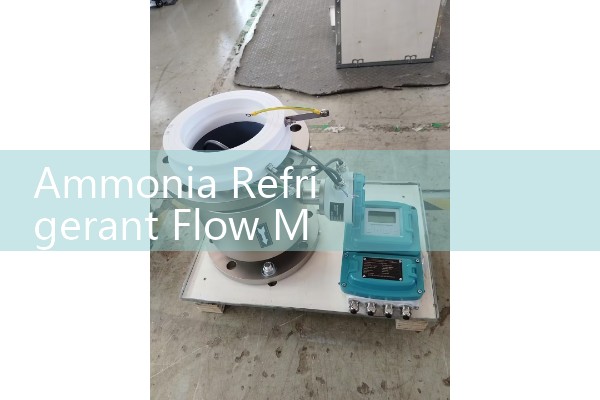
『Ammonia Refrigerant Flow Meter: Sealing Against Vapor Leaks; consult ASHRAE Standard 15 for safety.』Related information(v cone flow meter|rotary gas meter|gallon meter|gear meter|metal tube rotameter|glass tube rotameter|nutating disk meter|transit time ultrasonic flow meter|wedge flow meter|pd meters|hydraulic flow meter|ultrasonic water flow meter|water flow meter|air flow meter|magnetic water flow meter|oxygen flow meter|gas flow meter|argon flow meter|air velocity meter|gasoline flow meter|fuel flow meter|ultrasonic water meter|digital water meter|nitrogen flow meter|solid flow meter|Oxygen tank flow meter|digital water flow meter|diesel fuel flow meter|steam flow meter|02 flow meter|compressed air flow meter|oil flow meter|liquid flow meter)
Ammonia Refrigerant Flow Meter: Sealing Against Vapor Leaks
Quick Answer: Ammonia refrigerant flow meters must use metal-to-metal seals, PTFE-free gaskets, and full-penetration welds to prevent toxic vapor leaks. Silver Automation Instruments supplies Coriolis mass flow meters with welded 316L stainless steel construction and double containment options rated for anhydrous ammonia service. Follow ASHRAE Standard 15 and local safety codes during installation, purge, and maintenance.
A small ammonia leak from a flow meter flange can shut down an entire cold storage facility. We learned this from a vegetable packing plant in Queensland, Australia. Their ultrasonic flow meter gasket failed after three years of service. The O-ring material absorbed ammonia, swelled, and cracked. The repair cost 14 times the original gasket price in downtime and emergency ventilation alone. That is why flow meter sealing design matters more than most engineers think.
Ammonia (R-717) is a great refrigerant but it is also a hazardous gas. ASHRAE Standard 15 defines the safety requirements for refrigeration systems. It mandates leak detection, ventilation, and mechanical room design. But the standard does not spell out which flow meter seal works. That part is up to you and your supplier. Most ammonia refrigerant flow meters fail at the boundary between the meter body and the process connection. O-rings, spiral wound gaskets with PTFE fill, and silicone-based sealants are not reliable for anhydrous ammonia over long periods. Ammonia eats them slowly. Some elastomers harden. Some dissolve. PTFE cold flows under pressure cycles. So you end up with a micro leak that grows.
Silver Automation Instruments uses a straightforward approach for ammonia flow meters. We build our Coriolis mass flow meters with all-welded 316L stainless steel housing. No internal gaskets. No elastomer O-rings. The process connections are either butt-weld ends or threaded connections with metal-to-metal cone seals. For pipe sizes from DN15 to DN50, we recommend the SIL-COR-1100 series. It measures mass flow directly in kg/h, density in kg/m³, and temperature in °C. The accuracy is ±0.2% of rate for liquid ammonia and ±0.5% for vapor. Output signals include 4-20 mA HART, RS-485 Modbus, and pulse. The meter comes with ATEX Zone 1 certification for gas and dust as standard. You do not need extra enclosures or adapters.
For larger ammonia lines up to DN100, we configure the SIL-COR-2100 series with secondary pressure containment. The outer shell is rated to 1.5 times the design pressure. If the measuring tube ever leaks, the outer shell contains the ammonia vapor and triggers a pressure switch wired to your alarm panel. This is inline with ASHRAE Standard 15 section 9.2.2 on pressure-relief device discharge piping. We have supplied these meters to a fish processing plant in Chile and a dairy processor in New Zealand. One dairy customer ran 600 kg/h of ammonia liquid at -10 °C and 12 bar pressure. They installed two meters in parallel with isolation valves and gas detectors. No seal leaks after 18 months of continuous duty.
Installing an ammonia flow meter safely is not just about the hardware. Purging the system with dry nitrogen before startup is mandatory. Moisture plus ammonia creates ammonium hydroxide, which attacks copper and brass components inside some instruments. Our meters contain zero copper-bearing parts. The wetted materials are 316L and 1.4404 steel only. We also advise against soft-seated valves upstream of the flow meter. A sudden pressure drop can cause flashing, erosion, and off-scale readings. Use a full-bore ball valve instead. Keep the meter 10 pipe diameters away from the compressor discharge. The pulsation from reciprocating compressors confuses the Coriolis drive frequency. A straightening vane is cheap insurance.
We often get asked about digital ammonia leak sensors. These can be integrated with our flow meters through a 4-20 mA inpu
In practice, a small ice-making factory in Thailand ran into trouble with their vortex flow meter on ammonia vapor return. The vortex sensor shedder bar corroded and the meter read 20% low. They switched to a thermal mass flow meter from us with a Hastelloy sensor tip. That solved the corrosion issue. But the thermal meter required a yearly calibration check against a reference gauge because of oil carryover from the screw compressor. We recommend the Coriolis meter for ammonia liquid lines for this very reason. No moving parts. No drift. No oil interference. Just one weld between your pipe and the meter. No potential leak paths.
Trace heating is another detail most engineers skip. If your ammonia flow meter is installed outdoors in cold climates, wrap it with a 120 VAC self-regulating heating cable. Keep the meter body above the ammonia saturation temperature at the operating pressure. This prevents condensation and ice formation on the electronics housing. At a mine cooling plant in Peru, we supplied a meter with an integrated PT100 RTD and heater control. The local installation contractor used a silicone-free sealant on the cable gland threads. That small choice avoided a silicone contamination risk in the ammonia loop. Simple things matter.
Contact us to specify your ammonia flow meter requirement. Send your operating pressure (bar), temperature (°C), pipe size (DN), and required flow range (kg/h or litre/h) to Email: [email protected]. You can also reach our application engineers by Tel: +86-25-68650347 or Whatsapp: +86-25-52155837. For instant messaging via WeChat, add +86 15365082610. We deliver ammonia flow meters to Southeast Asia, Oceania, the Middle East, and South America with full material certificates and hydrostatic test reports.
FAQ
Can I use a vortex flow meter with ammonia vapor?
Yes, but you must select a stainless-steel shedder bar and ensure no PTFE liner is in contact with the gas. We do not recommend vortex meters with unsealed sensor cavities. Ammonia can seep into the housing and corrode the electronics. Coriolis and thermal mass meters offer better long-term sealing.
What gasket material does ASHRAE 15 accept for ammonia?
ASHRAE 15 does not specify gasket types. It requires compliance with the local mechanical code and material compatibility with ammonia. In practice, use grade 9040 compressed fiber gaskets without graphite or PTFE binders, or metal ring joints. Avoid rubber gaskets entirely.
How do you pressure-test the flow meter after installation?
We issue a hydrostatic test certificate at 1.5 times design pressure for 30 minutes with deionized water. After installation, purge with dry nitrogen to remove moisture and perform a helium leak test at 10^(-6) mbar l/s sensitivity. Never use compressed air. Oil in compressed air contaminates ammonia systems.
Does the meter require recalibration for ammonia?
No. Our Coriolis meters are factory calibrated on water and then corrected for ammonia using the density and viscosity of R-717 at your operating temperature. The correction factor is built into the transmitter. If your ammonia purity drops below 99.5%, contact us with a sample analysis to adjust the density setpoint.
What is the delivery time for a DN40 ammonia Coriolis meter with ATEX certification?
Standard delivery is 3 to 4 weeks. For urgent orders, we keep a stock of DN25 and DN50 meters with ATEX/IECEx certification in our Singapore warehouse. A customer in Dubai recently received a DN50 meter within 5 working days by DHL Express. Provide your exact port and we will quote the freight cost.
 Hot Product
 Related AD