

『ABB Coriolis Mass Flow Meter: Sizing multi-variable liquid density instruments.』Related information(v cone flow meter|rotary gas meter|gallon meter|gear meter|metal tube rotameter|glass tube rotameter|nutating disk meter|transit time ultrasonic flow meter|wedge flow meter|pd meters|hydraulic flow meter|ultrasonic water flow meter|water flow meter|air flow meter|magnetic water flow meter|oxygen flow meter|gas flow meter|argon flow meter|air velocity meter|gasoline flow meter|fuel flow meter|ultrasonic water meter|digital water meter|nitrogen flow meter|solid flow meter|Oxygen tank flow meter|digital water flow meter|diesel fuel flow meter|steam flow meter|02 flow meter|compressed air flow meter|oil flow meter|liquid flow meter)
ABB Coriolis Mass Flow Meter: Sizing Multi-Variable Liquid Density Instruments
Quick Answer: For liquid density and mass flow, size the ABB Coriolis meter by mass flow rate, density range, viscosity, pressure drop, and pipe size. Do not size only by pipe diameter or volumetric flow. Silver Instruments recommends a sensor with a nominal flow range that keeps velocity between 1 and 10 m/s and pressure drop below 0.5 bar for most liquid batching and process lines.
Why Liquid Density Changes the Sizing Logic
Here is the thing. A Coriolis meter measures mass flow, density, and temperature at the same time. When liquid density varies, the same volumetric flow gives a different mass flow. In food and beverage plants, syrup density can shift from 1.0 to 1.3 kg/L between batches. In chemical dosing, methanol and water blends change density from 0.79 to 1.0 kg/L. If you size the meter on volume only, you risk low flow accuracy or high pressure drop.
Most engineers skip this part. The meter tube amplitude depends on fluid density. Dense liquids need more drive power. The sensor must be sized so the drive loop stays stable across the full density range. ABB and Silver Instruments Coriolis meters list density range in their datasheets. Check this range against your minimum and maximum product density.
Key Sizing Inputs for Multi-Variable Liquid Service
Collect these process values before you size a Coriolis meter. Mass flow rate in kg/h or t/h. Volume flow in m3/h or L/h. Operating density in kg/m3 or g/cm3. Viscosity in cP or mPa.s. Pressure in bar and temperature in °C. Pipe size in DN.
For a multi-variable liquid density meter, density accuracy is a separate specification. ABB Coriolis meters often publish density accuracy around 0.5 to 1.0 kg/m3 for liquids. Silver Instruments SI-320 Coriolis meters offer density accuracy of 0.5 kg/m3 and mass flow accuracy of 0.2 percent of rate. Use those values in your control scheme for blending, concentration, or interface detection.
Pipe Size Is Not Enough
We have seen customer sites where a DN25 line was used for a flow range of 200 to 5000 kg/h. The line size matches, but the meter was too large at low flow. A Coriolis meter turndown is high, but not infinite. At 200 kg/h, a large sensor may run below the accurate low flow cutoff. The same problem appears in desalination plants with seawater flow from 2 to 20 m3/h and density from 990 to 1035 kg/m3.
In practice, size the meter so the minimum flow stays above 5 percent of nominal flow. If your flow range is 100 to 3000 kg/h, pick a sensor with nominal capacity near 3000 kg/h. The low end accuracy then stays stable. This rule works for ABB Coriolis meters and for Silver Instruments Coriolis meters.
Viscosity and Pressure Drop Trade Off
High viscosity liquids like glucose syrup, molasses, or heavy fuel oil cause higher pressure drop. A meter sized only for mass flow may create 1 to 2 bar pressure loss in a 100 cP liquid. That is too high for a transfer line with 4 bar supply pressure. For liquids above 50 cP, choose one size larger sensor and check the Reynolds number. The meter still measures mass flow directly, but the pressure drop must stay below your pump budget.
Last year a customer in Vietnam sized a DN40 Coriolis meter for 10 t/h of latex with viscosity around 200 cP. The pressure drop was 1.8 bar. They changed to DN50 and pressure drop fell below 0.7 bar. The density and mass flow accuracy did not change. This is a typical case for water based coatings an
Recommended Model Pairing by Application
For clean water, wastewater sludge, and seawater desalination, choose a DN15 to DN100 Coriolis meter with 316L stainless steel wetted parts. For food and beverage, choose hygienic connections such as Tri Clamp and 316L with Ra 0.8 µm finish. For chemicals and solvents, check PTFE or Hastelloy liners if the liquid is corrosive. For marine fuel and bunkering, use a meter with density accuracy of 0.5 kg/m3 and a pressure rating of PN40 or higher.
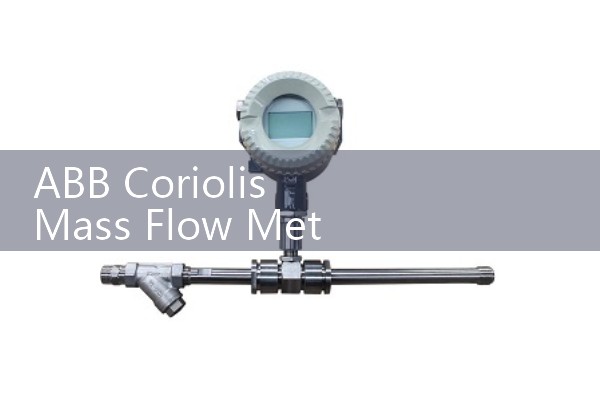
Silver Instruments offers the SI-320 Coriolis mass flow meter for liquid density, mass flow, volume flow, and temperature. It supports DN3 to DN150, process pressure up to 100 bar, process temperature from -50 to 200 °C, and output signals including 4-20 mA HART, pulse, and RS485 Modbus. The meter uses a PT100 temperature sensor for density compensation and media temperature output. The meter is available with Ex d or Ex ia approvals for ATEX Zone 1 and Zone 2.
Common Sizing Mistakes in Liquid Density Applications
First, using line size only. Second, ignoring density range when liquid blends change. Third, not checking pressure drop for viscous products. Fourth, not specifying the density accuracy class. Fifth, ordering a meter without the right wetted material for your product. We see these mistakes in oil and gas terminals, food plants, and chemical batching systems.
Because density measurement is integrated into the same sensor, you get more than a flow meter. You get concentration, solids content, or API gravity if the converter supports that. For multi-variable liquid density instruments, the converter should output mass flow, density, temperature, and volume flow at the same time. Check that the HART or Modbus map includes all four values.
How to Send a Sizing Request to Silver Instruments
Send us your pressure in bar, temperature in °C, pipe size in DN, and flow range in kg/h. Include liquid type, density range in kg/m3, and viscosity in cP. We will reply with a meter size, pressure drop estimate, accuracy class, and price quote. Contact Silver Automation Instruments at Tel: +86-135-1213-1526, WhatsApp: 86-135-12131526, or WeChat: +86 13512131526.
FAQ
Can I use an ABB Coriolis meter for changing liquid density? Yes. Size it for the full density range and check drive amplitude at the highest density. Confirm the converter outputs density as a 4-20 mA or HART variable.
What pipe size should I choose for a multi-variable liquid density meter? Do not choose by pipe size alone. Pick a sensor whose nominal flow range covers your minimum and maximum mass flow. Keep velocity between 1 and 10 m/s when possible.
Does Silver Instruments offer a direct replacement for ABB Coriolis meters? Silver Instruments supplies SI-320 Coriolis meters with similar process connections, 4-20 mA HART output, and density accuracy of 0.5 kg/m3. We cannot guarantee mechanical interchange for every ABB model, but the process fit is close for most DN15 to DN150 lines.
What information do I need for a price quote? Send flow range in kg/h, density range in kg/m3, viscosity in cP, pressure in bar, temperature in °C, pipe size in DN, and liquid name. We provide a written quote with lead time.
Which industries use these liquid density Coriolis meters? Oil and gas, water and wastewater, chemical, food and beverage, marine fuel, and desalination plants use them for batching, blending, interface detection, and mass balance.
 Hot News
 Related AD