

『Refrigerant Flow Meter for R&D Lab: High-Tier Instrumentation for Thermodynamic Analysis』Related information(v cone flow meter|rotary gas meter|gallon meter|gear meter|metal tube rotameter|glass tube rotameter|nutating disk meter|transit time ultrasonic flow meter|wedge flow meter|pd meters|hydraulic flow meter|ultrasonic water flow meter|water flow meter|air flow meter|magnetic water flow meter|oxygen flow meter|gas flow meter|argon flow meter|air velocity meter|gasoline flow meter|fuel flow meter|ultrasonic water meter|digital water meter|nitrogen flow meter|solid flow meter|Oxygen tank flow meter|digital water flow meter|diesel fuel flow meter|steam flow meter|02 flow meter|compressed air flow meter|oil flow meter|liquid flow meter)
Refrigerant Flow Meter for R&D Lab: High-Tier Instrumentation for Thermodynamic Analysis
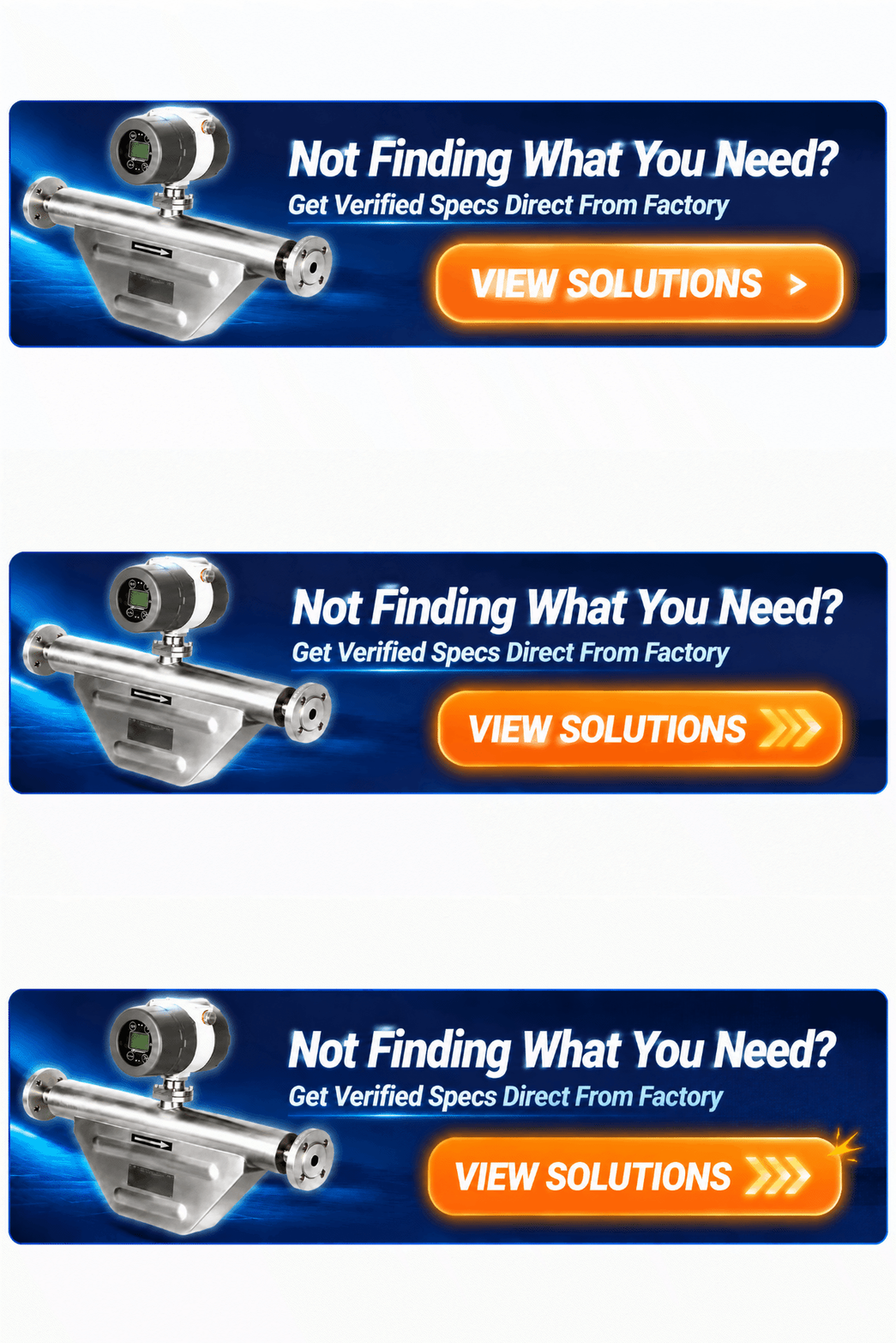
Quick Answer: When an R&D lab needs to measure refrigerant mass flow with high precision for COP testing, a Coriolis flow meter is the instrument that delivers direct mass, density, and temperature. Silver Instruments supplies compact Coriolis meters that can measure from 0.02 kg/h up to 60,000 kg/h. They handle refrigerants like R290, R32, R410A, and R744 without needing complex pressure compensation.
Why Mass Flow Matters in Refrigerant R&D Testing
In a calorimeter test or a balanced ambient room run, volumetric flow readings introduce errors. Gas density changes with temperature and pressure. A Coriolis meter bypasses this whole issue. It measures mass directly. We have seen many labs in Southeast Asia switch from turbine meters to Coriolis because refrigerant density swings too much during transient cycles. With a Coriolis sensor, the lab gets mass flow in kg/h, density in kg/m³, and temperature from a built-in PT100. That is three values from one instrument. No separate density meter is needed. Because the meter outputs true mass, engineers can calculate superheat and subcooling with confidence.
Real Case: R410A Compressor Testing in a Bangkok Lab
Last year a refrigeration lab near Bangkok contacted us. They were developing a new scroll compressor for R410A and needed to measure oil-refrigerant mixture flow accurately. Their old gear meter had internal leakage at low viscosity. We suggested a DN6 Coriolis meter with secondary containment. It handled flows from 0.5 kg/min to 15 kg/min. The direct mass output eliminated errors from gas fraction. The lab head told us the repeatability was within 0.05 percent and they could finally trust their COP numbers. This one upgrade cut their test uncertainty by more than half.
Selecting the Right Flow Meter Based on Refrigerant and Phase
Single-phase liquid refrigerant measurement is straightforward. Use a small-bore Coriolis meter, DN3 or DN4, and ensure back pressure stays above the vapor point. Two-phase flow is trickier. If you expect flash gas after the expansion valve, Coriolis meters can still measure total mass flow within limits. For pure gas phase, like discharge line measurements, a thermal mass flow meter might fit, but thermal meters lose accuracy when gas composition changes. Most R&D engineers stick with Coriolis for mixed-phase tests because they need true mass, not a calculated value. Silver Instruments offers meters rated for pressures up to 345 bar and temperatures from -50 °C to 210 °C, covering transcritical CO2 cycles.
Data Output Protocols and Lab Integration
In a modern lab, the meter must talk to LabVIEW, PLC, or a data acquisition system. All our Coriolis transmitters come standard with 4-20 mA HART, pulse, and Modbus RTU. Some labs request direct density output for real-time charge monitoring. We preconfigure the transmitter with customer-specific refrigerant density ranges. A dairy research center in New Zealand once asked for Ethernet/IP protocol to integrate with their Rockwell CompactLogix. We shipped a meter with the necessary board and a calibration certificate traceable to
Avoiding Common Pitfalls with Small Flows
Most R&D loops use small pipe sizes, sometimes as small as 1/8 inch OD. Standard industrial flow meters with DN15 or larger will simply not register these low flows. You need a meter with a very low minimum flow threshold. Silver Instruments Coriolis sensors go down to DN1 with a measurable flow of 0.02 kg/h. Another common mistake is mounting the sensor near a vibration source. Because Coriolis meters excite at their resonant frequency, external vibration can offset the zero. We always recommend a rigid bracket and flexible hoses at the connections. This one detail saves hours of troubleshooting. We have seen this on customer sites many times. In practice, most engineers skip this part and then wonder why the zero drifts.
Frequently Asked Questions about Refrigerant Flow Meters for R&D Labs
Q: Can a Coriolis meter measure refrigerant oil mixtures?
A: Yes, it measures total mass flow and density of the mixture. You get the combined mass. If you need to separate oil and refrigerant mass, you will need an additional oil concentration reference, but for thermal analysis, the total mass flow is what matters. Silver Instruments meters can handle oil fractions up to 15 percent without operational issues.
Q: What pressure ratings are available for CO2 transcritical cycles?
A: We offer Coriolis meters rated up to 345 bar (5000 psi) with Hastelloy C22 wetted parts. These meet the high pressures of R744. The process connection is typically autoclave type or high-pressure compression fittings. Provide your maximum working pressure and tube OD when you request a quote.
Q: How does the meter perform with refrigerant starting from a cold start?
A: The meter requires a short warm-up time, usually 10 minutes, to reach thermal equilibrium. Once the sensor and electronics are stable, the zero stability is maintained. For intermittent runs, we suggest leaving the meter powered and allowing flow to bypass the loop so it is ready for the next test.
Q: Do I need to recalibrate the meter for each refrigerant?
A: No. Coriolis meters measure mass flow independent of fluid properties. Density calibration can be done with water or a reference fluid. If your lab wants traceability with a specific refrigerant, we can calibrate at our facility with R134a or R410A, but it is not necessary for typical accuracy.
Q: What is the typical delivery time for a lab-scale Coriolis meter?
A: Meters with DN3 to DN6 sizes are often in stock. Custom pressure ratings or exotic wetted materials might extend lead time to 4 weeks. We ship from our factory by DHL or FedEx to Southeast Asia, Oceania, the Middle East, and Latin America. Email [email protected] for current inventory.
To get a recommendation tailored to your refrigerant and test bench, send your pressure, temperature, pipe size (DN), and flow range to [email protected]. You can also reach us on WhatsApp at 86-135-12131526 or call +86-135-1213-1526. WeChat: +86 13512131526.
 Hot News
 Related AD