

『Vortex flowmeter』Related information(v cone flow meter|rotary gas meter|gallon meter|gear meter|metal tube rotameter|glass tube rotameter|nutating disk meter|transit time ultrasonic flow meter|wedge flow meter|pd meters|hydraulic flow meter|ultrasonic water flow meter|water flow meter|air flow meter|magnetic water flow meter|oxygen flow meter|gas flow meter|argon flow meter|air velocity meter|gasoline flow meter|fuel flow meter|ultrasonic water meter|digital water meter|nitrogen flow meter|solid flow meter|Oxygen tank flow meter|digital water flow meter|diesel fuel flow meter|steam flow meter|02 flow meter|compressed air flow meter|oil flow meter|liquid flow meter)
1. What is the difference between vortex flowmeter and vortex swirl flowmeter? There are significant differences in the design principles and application fields between vortex flowmeter and vortex swirl flowmeter. The vortex flowmeter is based on the Karman vortex principle and is a flow measurement device with no moving parts. It is suitable for monitoring the flow of various fluids in industrial pipelines, including but not limited to gases, liquids, and vapors. The characteristics of this flowmeter are low pressure loss, wide range, and high accuracy. Moreover, its performance is almost unaffected by parameters such as fluid density, pressure, temperature, and viscosity when measuring volumetric flow under attitude disturbance conditions. The vortex swirl flowmeter adopts microprocessing technology, which has powerful functions, wide flow range, simple operation and maintenance, and convenient installation process. Its main technical indicators have reached the advanced level of similar international products, and are widely used in gas metering in industries such as petroleum, chemical, power, metallurgy, and coal. 2. What is the difference between the output form of vortex flowmeter, on-site display and pulse output?
Display: Numerical values are displayed through on-site display units, such as LCD digital tubes. This method can only be viewed on site and cannot be read or calculated. Pulse: Cumulative flow is represented by pulses, for example, each pulse represents a simple 0.1 M3/H, so 10 pulses are 1 M3/H. This method requires a counter to accumulate.. Can only calculate cumulative flow rate 4-20mA: can only represent instantaneous flow rate 4-20 represents 0-10 M3/h. If the current outp
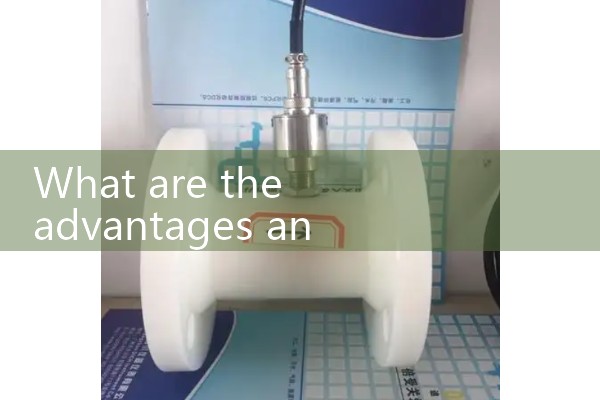
The advantages and disadvantages of a split type vortex flowmeter are as follows: Advantages: High precision measurement: Based on the mature Karman vortex principle, within the appropriate Reynolds number range, the measurement accuracy is high, generally reaching ± 1% R (R is the measurement value).. By accurately detecting the frequency of vortex shedding to calculate flow rate, accurate flow data can be provided when the fluid flow state is stable and within the designed measurement range. For example, in the meticulous batching process of chemical production, the flow rate of raw materials can be accurately controlled to ensure stable product quality. Wide range ratio: The range ratio can reach about 1:10-1:30, which can effectively work in a wide flow range and is practical for process flows with large flow changes. If the feed to the reaction kettle of a pharmaceutical company is small in the initial stage of the reaction and increases during the process, the vortex flowmeter can accurately measure the entire process without the need for frequent equipment replacement. Suitable for multiple fluids: can be used to measure various fluids such as liquids, gases, and vapors. Common industrial fluids such as water, oil, etc; Gases such as natural gas, compressed air, etc; Steam, whether saturated or superheated, can be measured as long as the parameters are within the allowable range of the equipment. It can play a role in multiple industries such a
 Hot News
 Related AD