Current position > Product detail
glycerin flow meter
『glycerin flow meter』Related information(v cone flow meter|rotary gas meter|gallon meter|gear meter|metal tube rotameter|glass tube rotameter|nutating disk meter|transit time ultrasonic flow meter|wedge flow meter|pd meters|hydraulic flow meter|ultrasonic water flow meter|water flow meter|air flow meter|magnetic water flow meter|oxygen flow meter|gas flow meter|argon flow meter|air velocity meter|gasoline flow meter|fuel flow meter|ultrasonic water meter|digital water meter|nitrogen flow meter|solid flow meter|Oxygen tank flow meter|digital water flow meter|diesel fuel flow meter|steam flow meter|02 flow meter|compressed air flow meter|oil flow meter|liquid flow meter)
 Here is a comprehensive article on glycerin flow meters.
---
### Measuring the Viscous: A Guide to Glycerin Flow Meters
In the world of industrial fluid handling, few substances present as unique a challenge as glycerin. Also known as glycerol, this versatile compound is a cornerstone of industries ranging from pharmaceuticals and cosmetics to food production and chemical manufacturing. Its high viscosity, hygroscopic nature, and tendency to change behavior with temperature make accurate flow measurement a complex, but critical, task. This is where the specialized selection of a **glycerin flow meter** becomes paramount.
#### The Challenge of Glycerin
Before selecting a meter, one must understand the fluid. Glycerin is notoriously thick. At room temperature, its viscosity can be over 1,000 times that of water. This high viscosity creates significant friction within a pipe system, meaning that a flow meter designed for low-viscosity liquids (like water or gasoline) will fail to provide accurate readings. The fluid’s density (approximately 1.26 g/cm³) and its sensitivity to temperature changes—which dramatically alter its viscosity—further complicate measurement. A meter that works at 20°C (68°F) might be grossly inaccurate at 60°C (140°F).
#### The Best Meter Technologies for Glycerin
Not all flow meters are created equal. For glycerin, the choice is often narrowed down to a few reliable technologies:
**1. Coriolis Mass Flow Meters (The Gold Standard)**
For applications demanding the highest accuracy and direct mass measurement, the Coriolis meter is unmatched. It works by vibrating a tube and measuring the phase shift caused by fluid passing through it. Because it measures mass flow directly, it is immune to chan
Here is a comprehensive article on glycerin flow meters.
---
### Measuring the Viscous: A Guide to Glycerin Flow Meters
In the world of industrial fluid handling, few substances present as unique a challenge as glycerin. Also known as glycerol, this versatile compound is a cornerstone of industries ranging from pharmaceuticals and cosmetics to food production and chemical manufacturing. Its high viscosity, hygroscopic nature, and tendency to change behavior with temperature make accurate flow measurement a complex, but critical, task. This is where the specialized selection of a **glycerin flow meter** becomes paramount.
#### The Challenge of Glycerin
Before selecting a meter, one must understand the fluid. Glycerin is notoriously thick. At room temperature, its viscosity can be over 1,000 times that of water. This high viscosity creates significant friction within a pipe system, meaning that a flow meter designed for low-viscosity liquids (like water or gasoline) will fail to provide accurate readings. The fluid’s density (approximately 1.26 g/cm³) and its sensitivity to temperature changes—which dramatically alter its viscosity—further complicate measurement. A meter that works at 20°C (68°F) might be grossly inaccurate at 60°C (140°F).
#### The Best Meter Technologies for Glycerin
Not all flow meters are created equal. For glycerin, the choice is often narrowed down to a few reliable technologies:
**1. Coriolis Mass Flow Meters (The Gold Standard)**
For applications demanding the highest accuracy and direct mass measurement, the Coriolis meter is unmatched. It works by vibrating a tube and measuring the phase shift caused by fluid passing through it. Because it measures mass flow directly, it is immune to chan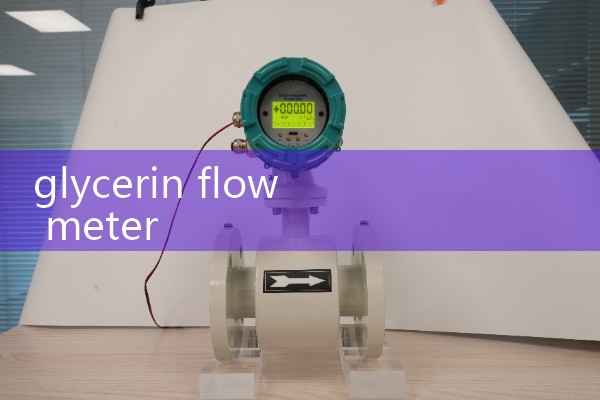 ges in viscosity, density, and temperature. This is ideal for glycerin, where viscosity varies wildly. Coriolis meters also provide density readings, allowing you to detect water contamination or changes in glycerin concentration. The primary downside is cost—they are significantly more expensive than other options.
**2. Positive Displacement (PD) Meters (The Reliable Classic)**
PD meters, such as oval gear or helical rotor designs, excel with high-viscosity fluids. They trap precise volumes of fluid in rotating chambers and count each cycle. Unlike Coriolis meters, PD meters measure volumetric flow. They are highly accurate for viscous liquids like glycerin, even at low flow rates. However, they are sensitive to solids or debris, which can jam the gears, and they create a slight pressure drop in the system.
**3. Magnetic Flow Meters (Magmeters)**
Glycerin can be sufficiently conductive (depending on its purity and water content) for a Magmeter to function. These meters use a magnetic field to induce a voltage proportional to the flow velocity. They have no moving parts, are low-maintenance, and handle the fluid’s density well. The significant limitation is that the fluid must have a minimum electrical conductivity; pure, anhydrous glycerin may not be conductive enough. They are also affected by flow profile, requiring sufficient straight pipe runs.
**4. Ultrasonic Transit-Time Meters (The Non-Invasive Option)**
Clamp-on ultrasonic meters measure flow by sending sound waves between two transducers and timing the difference. While non-invasive and low-maintenance, they struggle with high-viscosity fluids like glycerin. The high viscosity dampens the ultrasonic signal, often leading to error or complete signal loss. The
ges in viscosity, density, and temperature. This is ideal for glycerin, where viscosity varies wildly. Coriolis meters also provide density readings, allowing you to detect water contamination or changes in glycerin concentration. The primary downside is cost—they are significantly more expensive than other options.
**2. Positive Displacement (PD) Meters (The Reliable Classic)**
PD meters, such as oval gear or helical rotor designs, excel with high-viscosity fluids. They trap precise volumes of fluid in rotating chambers and count each cycle. Unlike Coriolis meters, PD meters measure volumetric flow. They are highly accurate for viscous liquids like glycerin, even at low flow rates. However, they are sensitive to solids or debris, which can jam the gears, and they create a slight pressure drop in the system.
**3. Magnetic Flow Meters (Magmeters)**
Glycerin can be sufficiently conductive (depending on its purity and water content) for a Magmeter to function. These meters use a magnetic field to induce a voltage proportional to the flow velocity. They have no moving parts, are low-maintenance, and handle the fluid’s density well. The significant limitation is that the fluid must have a minimum electrical conductivity; pure, anhydrous glycerin may not be conductive enough. They are also affected by flow profile, requiring sufficient straight pipe runs.
**4. Ultrasonic Transit-Time Meters (The Non-Invasive Option)**
Clamp-on ultrasonic meters measure flow by sending sound waves between two transducers and timing the difference. While non-invasive and low-maintenance, they struggle with high-viscosity fluids like glycerin. The high viscosity dampens the ultrasonic signal, often leading to error or complete signal loss. The『SILVER Official Website SERVICE』
User:rotametercad13Last Time:07/22/2026